What is the real difference between HubSpot CMS and Next.js for B2B SaaS?
HubSpot CMS is a hosted content platform inside HubSpot Content Hub, built for teams that want pages, blogs, forms, CRM data, and campaign reporting in one system. Next.js is a React framework for custom websites and web applications. B2B SaaS teams should treat HubSpot CMS as template-bound and Next.js as system-bound.
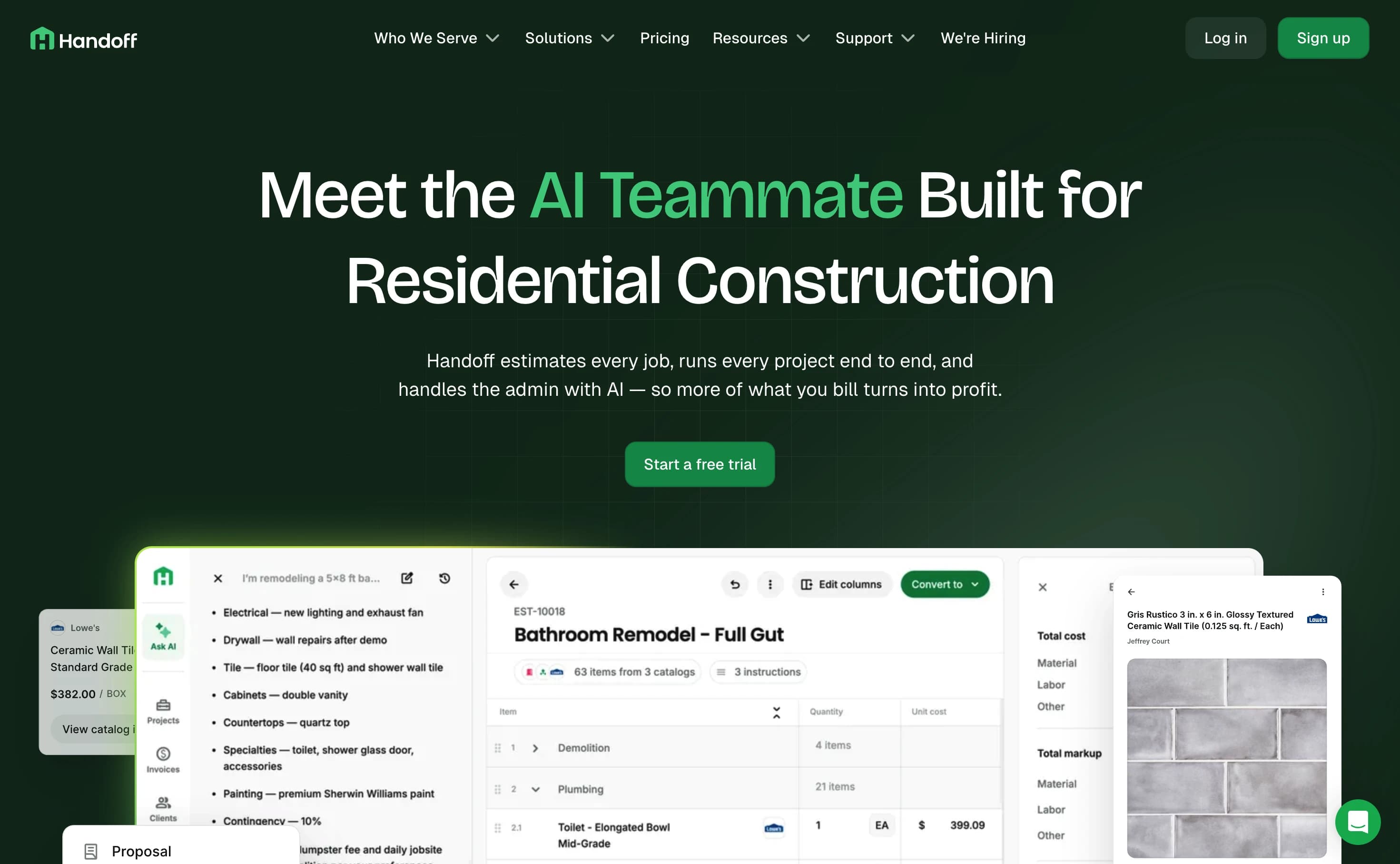
We see this split in platform decisions for companies like Hona, Handoff, IndeHR, Torch Dental, MeterNet USA, and Aurora Lights. HubSpot CMS fits lean teams that need a fast site connected to HubSpot CRM. Next.js is stronger when the website becomes a product education layer with reusable feature data, comparison templates, and strict performance targets.
The market signal is clear on both sides. HubSpot says Content Hub includes CMS, hosting, CRM tools, blogs, landing pages, forms, SEO features, and analytics, while Enterprise supports 10 total root domains (HubSpot Content Hub pricing). W3Techs tracks Next.js usage across high-traffic website segments in its April 2026 market report (W3Techs).
| Decision area | HubSpot CMS | Next.js + Sanity + Vercel |
|---|---|---|
| Fast publishing | Strong | Strong when Sanity is modeled well |
| CRM-native forms | Strong | Requires integration |
| Visual editing | Strong | Depends on CMS setup |
| Technical SEO control | Moderate to strong | Strong |
| AEO page systems | Limited by template model | Strong |
| Product-led content | Moderate | Strong |
| Performance control | Limited by platform and theme | Strong when implemented well |
| Content modeling | Good for marketing assets | Strong for relational content |
| Developer velocity | Strong for HubL teams | Stronger hiring pool for React and Next.js |
| Best stage | Pre-seed to early seed, HubSpot-native teams | Seed to Series B growth teams |
The practical difference is ceiling, not quality. HubSpot CMS can be the right call for a 30-page site where CRM workflows matter more than custom architecture. Next.js becomes the better call when every new campaign needs reusable content, page logic, performance budgets, and engineering review.
When should a SaaS company choose HubSpot CMS?
HubSpot CMS is the better choice when a SaaS company wants a hosted website connected to HubSpot CRM, forms, landing pages, blog publishing, basic personalization, and campaign reporting. HubSpot CMS works best for teams that want fewer tools, fewer integrations, and faster marketing ownership more than custom front-end control.
HubSpot's pricing guide lists Content Hub Free at $0, Starter from $9 per seat in its annual overview, Professional at $450 per month with annual billing, and Enterprise at $1,500 per month (HubSpot Content Hub pricing). Starter also includes custom domains and removal of HubSpot branding.
HubSpot CMS handles these typical SaaS pages well:
- Homepage
- Product overview
- 5-10 feature pages
- Pricing page
- Blog
- Basic landing pages
- Webinar registration pages
- Resource downloads
- Contact and demo pages
- Customer story pages
We recommend HubSpot CMS when the team already runs campaigns, lists, forms, email, and sales handoff inside HubSpot. A seed-stage SaaS company with 20-40 pages may get more value from publishing speed than from owning every rendering, routing, and schema decision.
The tradeoff is platform ceiling. HubSpot CMS becomes limiting when the site needs custom content relationships, page generation from product data, strict Core Web Vitals budgets, code-level experimentation, advanced routing, or reusable AEO templates across hundreds of pages. The all-in-one model reduces setup time, but it also narrows architectural control.
When should a SaaS company choose Next.js?
Next.js is the better choice when a SaaS website must support SEO scale, product-led pages, structured content, custom integrations, conversion testing, and tight performance budgets. Next.js gives teams control over rendering, routing, metadata, image strategy, schema, accessibility, analytics events, preview environments, and reusable components.
Google defines Core Web Vitals around loading, responsiveness, and visual stability, with good thresholds of LCP within 2.5 seconds, INP under 200 milliseconds, and CLS below 0.1 (Google Search Central). Those thresholds matter on high-intent pages where speed and indexing compound across pipeline.
In Virdis redesign and migration work, we usually recommend Next.js development for SaaS when two or more of these conditions are true:
- The site has more than 75 strategic pages.
- The SEO roadmap includes comparison, alternative, industry, use case, or integration templates.
- The CMS needs relationships between features, customers, industries, authors, CTAs, FAQs, and resources.
- Marketing wants reusable sections without design drift.
- The site needs app, billing, CRM, product analytics, or warehouse data.
- Localization affects URLs, metadata, content models, and QA.
- Core Web Vitals miss Google's good thresholds on important templates.
- Preview deployments, code review, and release discipline are part of the marketing workflow.
Next.js costs more upfront because it is a custom system, not a theme. A serious SaaS build includes design tokens, components, CMS schemas, preview URLs, redirects, analytics events, structured data, accessibility checks, image optimization, and launch QA.
Developer velocity also changes. HubSpot sites need HubL and HubSpot module experience. Next.js sites pull from the broader React hiring market, which usually makes long-term maintenance easier for SaaS teams with product engineering nearby.
Vercel lists Pro at $20 per month plus additional usage, with a $20 included usage credit and usage-based pricing for requests, bandwidth, functions, image optimization, and analytics (Vercel pricing). Infrastructure is usually smaller than the system design and engineering work.
How does Sanity change the Next.js vs HubSpot CMS decision?
Sanity changes the decision because Next.js alone is not a CMS. A Next.js frontend handles rendering and application structure, while Sanity stores structured content for features, use cases, industries, authors, CTAs, FAQs, case studies, comparison pages, redirects, and SEO metadata. That gives marketers editing access without giving up frontend control.
HubSpot CMS combines CMS, CRM, hosting, and marketing tools. Sanity separates content from presentation. Sanity lists a Free plan and a Growth plan at $15 per seat per month, with Enterprise pricing through sales (Sanity pricing). That makes Next.js less about developer ownership and more about reusable content.
For SaaS teams, the concrete gains from Sanity CMS development are practical:
- One feature record can power feature pages, comparison tables, internal links, and schema.
- One customer record can power case studies, testimonial blocks, industry pages, and logo walls.
- One CTA model can keep demo, trial, contact, and sales language consistent across the site.
- One FAQ model can support real page content and FAQ schema without duplicate copy.
- One redirect model can protect rankings during a HubSpot CMS to Next.js migration.
- One content type can support localization later without rebuilding every template.
We use this pattern when a SaaS site needs marketing autonomy and engineering-grade consistency. HubSpot CMS is attractive because everything is close together. Next.js plus Sanity is attractive because the website can become a governed content system instead of manually edited pages.
What are the SEO and AEO tradeoffs?
HubSpot CMS gives SaaS teams faster editorial execution and built-in marketing tools. Next.js gives stronger control over technical SEO and answer-engine optimization. HubSpot CMS can rank. Next.js is better when search visibility depends on structured data, internal links, dynamic metadata, page speed, and consistent answer blocks across many templates.
Google says Core Web Vitals measure real-world loading, interactivity, and visual stability, and recommends good scores for Search success (Google Search Central). HubSpot's guide shows Content Hub Professional includes SEO, AI, workflows, reporting, and up to 10,000 landing pages on higher tiers (HubSpot Content Hub pricing).
For B2B SaaS, SEO and AEO bottlenecks usually appear in these areas:
- Comparison pages with consistent product facts
- Alternative pages with reusable competitor records
- Pricing pages with plan logic and schema
- Feature pages that need connected proof points
- Industry and persona landing pages
- Integration directories
- Case study libraries
- Author, organization, review, and FAQ schema
- Programmatic internal linking
HubSpot CMS is good for manually managed marketing assets. Next.js is stronger for systems of pages. A comparison template can pull competitor details, product facts, FAQs, author data, related resources, and schema from structured records. That makes the page easier for AI Overviews and LLM tools to parse.
The honest downside: Next.js does not guarantee good SEO. Bloated client components, unbounded CMS queries, missing canonical rules, weak image handling, and sloppy caching can make a Next.js site perform worse than HubSpot CMS. The platform only helps when the team enforces performance budgets, clean content models, accessibility standards, and release QA.
What does a HubSpot CMS to Next.js migration usually involve?
A HubSpot CMS to Next.js migration usually involves content inventory, URL mapping, template redesign, CMS modeling, HubSpot form integration, redirect planning, analytics parity, Core Web Vitals cleanup, and launch QA. The goal is not to copy every page. The goal is to turn a hosted marketing site into a maintainable growth system.
HubSpot says Content Hub integrates with more than 1,500 applications and includes hosting, forms, CRM tools, landing pages, blogs, analytics, and security features (HubSpot Content Hub pricing). Migration planning should preserve useful HubSpot pieces: forms, CRM routing, workflows, campaign tracking, and attribution.
A practical HubSpot CMS to Next.js migration sequence looks like this:
- Crawl every indexable URL and export page metadata.
- Pull traffic, rankings, conversions, backlinks, and assisted pipeline data.
- Identify which HubSpot modules are page content, CRM logic, forms, or campaign infrastructure.
- Group pages by business purpose instead of old templates.
- Define Sanity content types and references.
- Rebuild shared sections as Next.js components.
- Keep HubSpot forms where they support routing, scoring, and lifecycle workflows.
- Map titles, descriptions, canonical URLs, Open Graph images, and schema.
- Create 301 redirects before launch.
- Verify analytics, consent, CRM attribution, and form submissions before DNS cutover.
- Measure LCP, INP, and CLS on priority templates after launch.
During the MeterNet USA migration audit, we reduced the priority page LCP from 4.2 seconds to 0.9 seconds by refactoring image delivery, script execution, caching, and rendering. We treated Core Web Vitals as launch acceptance criteria, not cleanup work after the redesign was public.
The same migration discipline applies to broader SaaS redesigns like the Hona case study and Handoff case study: preserve the working go-to-market system, then rebuild the website architecture around the next stage of growth.
How much does each option really cost?
HubSpot CMS is usually cheaper to launch when the team already pays for HubSpot and needs an integrated marketing site. Next.js is usually more expensive to build, but it can become cheaper to scale once content systems, conversion testing, SEO templates, and product data become recurring growth work.
HubSpot lists Content Hub Professional at $450 per month with annual billing and Enterprise at $1,500 per month, while Vercel lists Pro at $20 per month plus usage and Sanity lists Growth at $15 per seat per month (HubSpot, Vercel, Sanity). Platform fees do not include strategy, design, development, QA, analytics setup, or migration risk.
| Cost area | Typical range | Notes |
|---|---|---|
| HubSpot Content Hub | $0-$1,500+/month | Free, Starter, Professional, and Enterprise pricing depends on tier and seats |
| HubSpot add-ons and seats | Varies | Additional seats, hubs, contacts, and add-ons can change total spend |
| Vercel | $20+/month | Pro starts at $20/month plus usage-based resources |
| Sanity | $0-$15+/seat/month | Free and Growth plans cover many early SaaS sites |
| Analytics and testing | $0-$500+/month | Depends on attribution, privacy, heatmaps, and experimentation tools |
| Initial build | Lower for HubSpot CMS, higher for Next.js | Next.js requires custom design systems, schemas, components, and QA |
| Maintenance | Retainer or internal time | HubSpot modules and campaigns versus code releases and CMS governance |
The expensive Next.js mistake is building a custom platform before the website has enough surface area. The expensive HubSpot CMS mistake is staying after every growth request becomes a module workaround, duplicated edit, performance compromise, or SEO template limitation.
We frame the decision around payback. If a Next.js rebuild helps ship 100 high-intent pages, improve Core Web Vitals, reduce duplicate content work, and keep demo attribution intact, the build cost can be rational. If the site is 25 pages and positioning still changes monthly, HubSpot CMS may be cleaner.
Which platform should seed to Series B SaaS teams choose?
Seed to Series B SaaS teams should choose HubSpot CMS for speed and integration, and Next.js for scale and control. The best migration point is when the website becomes a repeatable acquisition channel with structured content, technical SEO, conversion testing, and page systems.
Use this decision matrix:
| Situation | Recommendation |
|---|---|
| Pre-seed, under 25 pages, founder-led updates | HubSpot CMS |
| Seed, all marketing and sales workflows already live in HubSpot | HubSpot CMS |
| Seed, simple blog and standard landing pages | HubSpot CMS |
| Seed, 75+ pages with active SEO roadmap | Next.js + Sanity |
| Series A, multiple personas, industries, and use cases | Next.js + Sanity |
| Series A-B, localization or programmatic SEO | Next.js + Sanity |
| Product-led site with app, CRM, or warehouse data | Next.js |
| Heavy paid acquisition with CRO testing | Next.js, unless HubSpot CMS already has strong governance |
| Marketing team needs CRM-native campaigns more than custom templates | HubSpot CMS |
The right answer is not ideological. HubSpot CMS is useful when the CRM and marketing motion are the center of gravity. Next.js is stronger when the website itself becomes growth infrastructure. For serious SEO, AEO, and product-led content, Next.js with Sanity is the stronger long-term platform.
Teams still evaluating the broader redesign timing can use the SaaS redesign framework before committing to a migration. Teams comparing other platform paths can also read Next.js vs WordPress for SaaS, Next.js vs Webflow for SaaS, or the Torch Dental case study for more implementation context.