What should B2B SaaS teams look for in a website framework?
B2B SaaS teams should choose a website framework by evaluating content velocity, CMS structure, conversion UX, analytics governance, hiring depth, maintenance risk, and performance budgets. A framework is not just a rendering choice. It determines how fast the team can ship, test, measure, and improve revenue pages.
Google defines Core Web Vitals around loading, interactivity, and visual stability, with good thresholds of 2.5 seconds or less for Largest Contentful Paint, 200 milliseconds or less for Interaction to Next Paint, and 0.1 or less for Cumulative Layout Shift (web.dev). Those thresholds matter because SaaS marketing sites often carry product screenshots, comparison tables, demo forms, chat, enrichment scripts, and analytics tags.
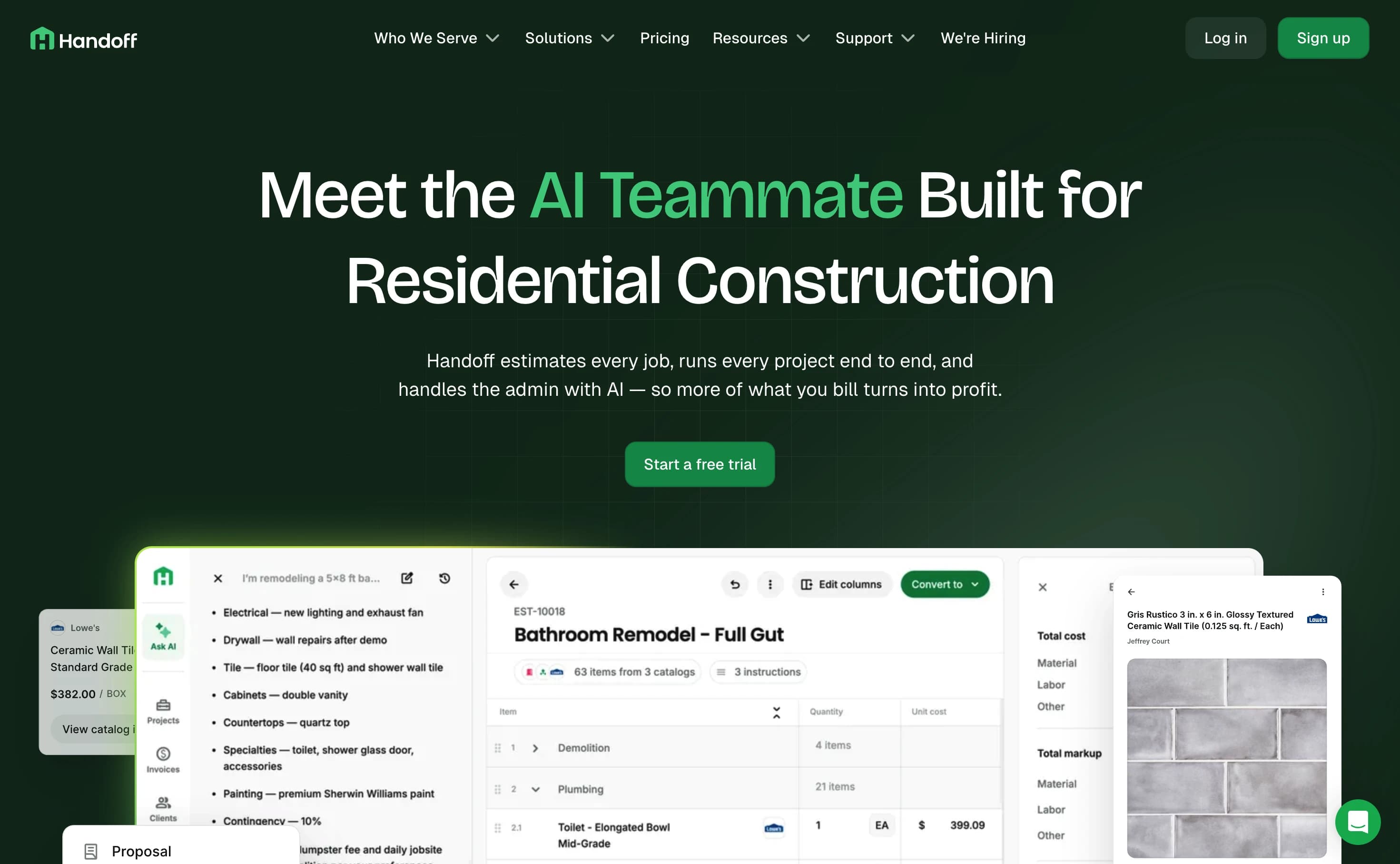
At Virdis, we see framework decisions go wrong when the question starts with developer preference instead of website operations. In work across SaaS sites such as Hona, Handoff, IndeHR, and MeterNet USA, the durable gains usually come from pairing design, content models, front-end architecture, hosting, and measurement. We use a full-stack custom design and development lens before choosing the specific framework.
Use this decision matrix before shortlisting tools:
| Criterion | Why it matters for B2B SaaS | Strong fits |
|---|---|---|
| Content velocity | Marketing needs to update product, proof, pricing, and SEO pages without breaking layouts | Astro, Next.js, Webflow, WordPress headless |
| CMS structure | Teams need reusable modules, previews, metadata, authors, and safe publishing workflows | Astro, Next.js, Sanity, WordPress headless |
| Technical control | Engineers need control over routing, redirects, schemas, scripts, caching, and deployment | Astro, Next.js, Remix, Nuxt, SvelteKit |
| Conversion UX | Demo forms, calculators, comparison pages, and routing logic need reliable behavior | Next.js, Remix, SvelteKit, Laravel with Inertia |
| Analytics governance | Attribution scripts and events need to be consistent without slowing the site | Astro, Next.js, Remix, SvelteKit |
| Hiring and ownership | The future team needs to maintain the system during launches and redesigns | Next.js, WordPress, Webflow, Nuxt |
Related Virdis resources: B2B SaaS web design, Sanity CMS development, Core Web Vitals for SaaS sites, and the website structure guide.
Which framework is best overall for SaaS marketing sites?
Astro is the best overall framework for content-heavy B2B SaaS marketing sites in 2026 because it ships minimal JavaScript by default, supports component islands, integrates well with headless CMS platforms, and keeps mostly static pages fast. The tradeoff is that application-like workflows may fit better in Next.js, Remix, or SvelteKit.
Astro is strongest when the website is a marketing system rather than the product itself. That includes homepages, solution pages, comparison pages, customer stories, blogs, resource hubs, landing pages, and documentation. Strapi describes Astro sites as primarily static by default, with JavaScript loaded only where a component needs it (Strapi). Cosmic makes a similar distinction: Astro is strongest when content is central, while Next.js is stronger when the project is also an application (Cosmic).
For a seed to Series B SaaS team, that default matters. A marketing website usually needs fast page loads, clean schemas, reusable content blocks, predictable previews, and low script overhead more than it needs application routing inside the same codebase. We often recommend keeping the marketing site and product app separate unless there is a clear shared-auth, shared-data, or one-repo reason to combine them.
Rank the top 10 this way for B2B SaaS marketing work:
- Astro: best for content-heavy custom SaaS marketing sites.
- Next.js: best for hybrid marketing and app-adjacent workflows.
- Remix: best for web-standard forms, mutations, and server-first UX.
- Nuxt: best for Vue teams that want a full-featured framework.
- SvelteKit: best for lean, interactive sites with small bundles.
- Gatsby: best for teams already invested in Gatsby and static content.
- Webflow: best for visual launch speed and smaller marketing teams.
- WordPress headless: best when editorial workflows are already WordPress-centered.
- Framer: best for fast campaign pages and design-led prototypes.
- Laravel with Inertia: best for PHP teams that want marketing pages near app logic.
When should a SaaS team choose Astro?
A SaaS team should choose Astro when the website is content-led, SEO-heavy, and built around fast marketing pages rather than app-like state. Astro works well for product pages, blogs, comparison pages, documentation, resource libraries, and landing pages that need strong Core Web Vitals with selective interactivity.
Astro's main advantage is restraint. The framework starts from HTML and adds client-side JavaScript only where needed. That model fits SaaS marketing sites because most of the page is static messaging, proof, product visuals, and structured content. The interactive parts are usually isolated: accordions, pricing toggles, video modals, ROI calculators, embedded forms, or navigation.
The SaaS tradeoff is ecosystem and app complexity. Astro can render server-side pages and can use components from React, Vue, Svelte, and other libraries, but teams building complex authenticated flows usually want a framework that treats application behavior as the default. If the marketing site shares deeply with the product app, Astro may add a second mental model.
Choose Astro when these conditions are true:
- The site has 30 or more public marketing, SEO, case study, or resource pages.
- The marketing team needs structured CMS fields instead of freeform page assembly.
- Core Web Vitals and organic search are part of the rebuild brief.
- The product app can stay separate from the marketing website.
- Interactivity exists, but most components do not need hydration.
We like Astro paired with a headless CMS for SaaS sites that need careful content architecture. The pattern gives marketers a safe publishing interface and gives engineers control over metadata, redirects, schemas, image delivery, and reusable components. That same philosophy shows up in our guide to updating your own website without breaking SEO.
When is Next.js still the right choice?
Next.js is the right choice when a B2B SaaS website needs to sit close to product logic, dynamic data, React-heavy interactivity, middleware, authenticated preview flows, or shared application code. Next.js should not be the automatic answer for every marketing site, but it remains a strong full-stack framework for complex SaaS web systems.
Cosmic summarizes the core distinction clearly: Next.js gives teams React Server Components, API routes, middleware, server actions, and deployment patterns in one full-stack React framework (Cosmic). Strapi also notes that Next.js supports server-side rendering and static generation patterns, with server-side data fetching inside React Server Components (Strapi).
For SaaS marketing sites, the best Next.js use cases are specific. Use it when the marketing website needs interactive product demos, gated content workflows, account-aware pages, complex forms, personalization, experimentation, or shared UI packages with the product app. Avoid it when the only reason is that the engineering team already uses React. Familiarity helps, but it does not automatically make the public website easier for marketing to run.
Next.js is a strong fit when:
- The site and product app share components, routing patterns, or data models.
- Demo forms, calculators, or onboarding flows require server actions or API routes.
- The team wants React as the sole UI language.
- The hosting stack already depends on Vercel or a Next-compatible platform.
- The site has personalization, middleware, or authenticated preview requirements.
The downside is that Next.js can be overbuilt for mostly static marketing sites. Extra application capability can bring more architectural decisions, more client/server boundaries, and more JavaScript governance. Our Next.js vs Webflow for SaaS and Next.js vs WordPress for SaaS comparisons go deeper on that tradeoff.
How do Remix, Nuxt, and SvelteKit compare?
Remix, Nuxt, and SvelteKit are serious choices for B2B SaaS teams that want full-stack control but do not want the default Next.js path. Remix fits web-standard forms and server-first UX, Nuxt fits Vue organizations, and SvelteKit fits teams that value lean interactive components and concise implementation.
These frameworks are strongest when the team has a clear engineering preference and the marketing site needs more than static content. Remix is useful for form-heavy pages, quote flows, partner portals, and actions that benefit from server-first data handling. Nuxt is often the right answer when the company already builds in Vue. SvelteKit is compelling when the team wants a small-feeling interactive layer without carrying a large React footprint.
The main SaaS concern is not whether the frameworks are capable. They are. The question is whether your agency, internal engineers, and future hires can maintain the stack during launches, content changes, tracking updates, and redesign phases. Hiring depth and operational familiarity matter more than benchmark differences.
Use this comparison:
| Framework | Best B2B SaaS use case | Watch-out |
|---|---|---|
| Remix | Form-heavy marketing flows, server-rendered interactions, web-standard data mutations | Smaller SaaS marketing ecosystem than Next.js |
| Nuxt | Vue-based organizations that want SSR, SSG, routing, and content flexibility | Less useful if the broader team is React-first |
| SvelteKit | Lightweight interactive pages, fast UI, small teams comfortable with Svelte | Hiring pool may be narrower than React or Vue |
We are comfortable with any of these when the team's operating model supports them. For a marketing site rebuild, we would rather choose a well-maintained Nuxt or SvelteKit system with a clear CMS model than a fashionable framework with unclear ownership.
Are Gatsby and headless WordPress still viable?
Gatsby and headless WordPress are still viable for specific B2B SaaS teams, but they are no longer the default recommendation for new custom marketing sites. Gatsby can work for teams already invested in its plugin model. Headless WordPress can work when editorial history and WordPress operations are business requirements.
Gatsby's strongest case is continuity. If the existing site already uses Gatsby well, the content model is clean, and the team understands its build and data layer, a focused redesign may be more practical than a platform migration. Rebuilding purely to chase a newer framework rarely beats fixing templates, media, CMS fields, and analytics governance first.
Headless WordPress has a different reason to stay on the shortlist. Many marketing teams know WordPress, have existing editorial workflows, and rely on its plugin ecosystem. A headless approach can preserve that familiarity while giving engineers control over the front end. The risk is complexity: you are maintaining WordPress plus a custom front end, plus preview behavior, plus deployment coordination.
Choose one of these only when there is a clear reason:
- Gatsby: the site already runs on Gatsby and the migration cost outweighs the gain.
- Gatsby: the team depends on a known static content workflow.
- Headless WordPress: the content team already works well in WordPress.
- Headless WordPress: existing taxonomies, authors, and editorial permissions are hard to replace.
- Headless WordPress: the engineering team can support preview, caching, security, and plugin governance.
For new full-stack custom SaaS marketing sites, we usually prefer a purpose-built headless CMS with a modern framework. Sanity-style structured content gives the editorial team safer modules, and the front end can be Astro, Next.js, Remix, Nuxt, or SvelteKit based on the real requirements.
When do Webflow and Framer make sense?
Webflow and Framer make sense when a B2B SaaS team needs visual speed, a smaller site footprint, and quick campaign execution more than deep custom engineering control. They are not weak choices. They are different operating models, and they fit best before content architecture, analytics complexity, and template governance become limiting factors.
Webflow's own SaaS website guidance frames SaaS websites as tools for education and conversion, which is the right lens for this decision (Webflow). A visual platform can help a lean marketing team ship a homepage, product pages, and landing pages quickly when design iteration is the bottleneck.
Framer is similar but more design-led. It can be a good fit for campaign microsites, founder-led launches, pre-seed positioning tests, or a polished temporary site before a larger custom build. The risk is that the site becomes the long-term system by accident. Once you need structured content, reusable schemas, advanced redirects, tight analytics governance, and complex integrations, the early speed can turn into maintenance friction.
Use Webflow or Framer when:
- The site is small and will stay small for the next few quarters.
- Launch speed matters more than deep technical control.
- The marketing team needs direct visual editing.
- SEO requirements are straightforward.
- Engineering capacity is limited.
Move toward a custom full-stack build when the site needs repeatable page templates, a serious resource library, comparison SEO, advanced CMS roles, localization, attribution governance, or custom conversion flows. The Next.js vs Framer for SaaS and Next.js vs HubSpot CMS for SaaS articles cover adjacent platform decisions.
What about Laravel with Inertia for SaaS marketing?
Laravel with Inertia is a good fit when a PHP-based SaaS team wants marketing pages, logged-in flows, and server-rendered application behavior to live in a familiar backend environment. It is rarely the first choice for a standalone marketing site, but it can be practical when the website and product are operationally connected.
This option belongs on the list because many SaaS companies still run strong Laravel products. For those teams, keeping conversion flows near existing app logic can reduce coordination cost. Inertia lets teams build modern front-end pages while using Laravel routing, controllers, auth, and server-side patterns. That can make demo flows, partner portals, calculators, and account-aware pages easier to own.
The tradeoff is marketing specialization. A Laravel-plus-Inertia site can be excellent, but it may not give marketers the same content editing comfort as a dedicated headless CMS and website framework. It can also make brand and content work feel too close to product engineering queues.
Consider Laravel with Inertia when:
- The product is already Laravel.
- Marketing pages need app data, auth, or backend workflows.
- The same team owns product and website delivery.
- PHP hiring and maintenance are strengths for the company.
- The site is more operational than editorial.
For most SaaS marketing rebuilds we handle, the better pattern is a decoupled marketing site with a structured CMS, modern hosting, and carefully governed integrations. That keeps the marketing roadmap from depending on product release cycles while still allowing API integrations where they matter.
How should a seed to Series B SaaS team decide?
A seed to Series B SaaS team should decide by matching the framework to the next 12 months of website operations, not by chasing the most popular developer tool. Content-heavy marketing sites usually favor Astro or another lean custom framework. Hybrid website-app systems often favor Next.js, Remix, SvelteKit, Nuxt, or Laravel with Inertia.
The practical decision is simple: define the next 12 months of website work before selecting the stack. A site with five pages, one marketer, and urgent launch pressure has a different answer than a Series A site with comparison SEO, partner pages, localization, a resource hub, campaign landing pages, and attribution requirements.
Use this shortlist:
| SaaS situation | Recommended direction |
|---|---|
| Content-heavy marketing site with SEO growth goals | Astro with a headless CMS |
| Marketing site shares logic with product app | Next.js, Remix, or Laravel with Inertia |
| Vue team rebuilding a public website | Nuxt with structured CMS content |
| Small team launching quickly | Webflow or Framer |
| Existing WordPress editorial operation | Headless WordPress if governance is strong |
| Existing Gatsby site with clean architecture | Improve Gatsby before migrating |
We usually start with a website systems audit: page inventory, buyer journeys, content model, CMS needs, analytics plan, Core Web Vitals, redirect risk, and internal ownership. That process prevents the framework from carrying responsibility for problems that actually belong to strategy, design, content, or operations. It also helps teams avoid rebuilding the same constraints in a newer tool.
For most Virdis clients, the durable answer is full-stack custom design and development with a headless CMS and modern hosting. The exact framework should serve the site. It should not become the strategy.
Frequently asked questions
These questions come up often when SaaS teams compare website frameworks during a redesign or migration. The best answer depends on content operations, performance needs, and the relationship between the marketing site and product app.
What is the best website framework for B2B SaaS in 2026?
Astro is the best default for content-heavy B2B SaaS marketing sites. Next.js is better when the website needs app-like logic, shared React components, server actions, or complex personalization. Webflow and Framer can work for smaller teams that need launch speed.
Is Next.js overkill for a SaaS marketing site?
Next.js can be overkill when the site is mostly static content, SEO pages, case studies, and landing pages. It is a strong fit when the marketing site shares product logic, uses complex forms, needs dynamic data, or depends on React-heavy interactivity.
Should SaaS companies use a headless CMS?
Most growing SaaS companies should use a headless CMS when the site has reusable modules, multiple authors, resource content, case studies, SEO metadata, and frequent campaigns. A headless CMS keeps publishing flexible while preserving template and performance control.
Are Webflow and Framer good enough for SaaS SEO?
Webflow and Framer can be good enough for smaller SaaS sites with straightforward SEO needs. Custom frameworks become more attractive when the site needs complex content models, comparison pages, advanced redirects, tight tracking governance, or performance budgets.
Can a SaaS company use different frameworks for app and marketing?
Yes. Many SaaS teams should separate the product app from the marketing site. The app can use Next.js, Laravel, or another product framework while the marketing site uses Astro or another content-first stack connected to the same CMS or APIs.